1. Introduction: The Problem You Don’t See Coming
Most rat problems don’t start where people expect them to. You might notice a scratching sound at night, a strange smell, or even see one in the kitchen—but the real entry point is often completely hidden underground.
In places like Chelmsford and across Essex, drainage systems quietly connect entire neighborhoods beneath the surface. And for rats, those systems are basically free transport routes with food, water, and shelter included.
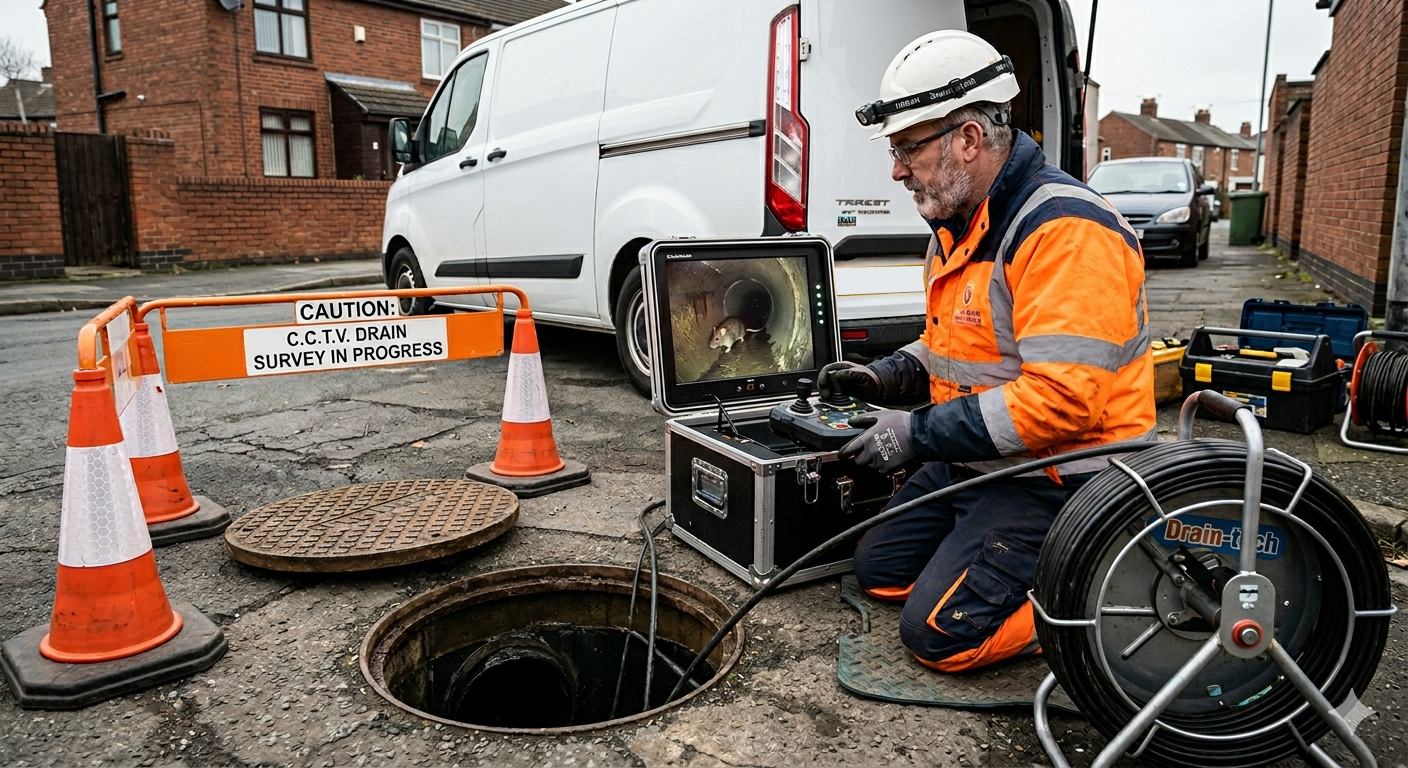
This is where CCTV Drainage Surveys for Rats come in. Not as some complicated technical service, but as a simple idea: instead of guessing where rats are coming from, you actually look inside the drains and see for yourself.
It sounds obvious, but most people only think about pest control after the problem has already spread.
2. Why Drains Become a Hidden Highway for Rats
If you picture a drainage system, it’s easy to think of it as just pipes carrying wastewater away. But for rats, it’s more like a tunnel network connecting multiple buildings.
They don’t need much to get in. A small crack, a loose joint, or even an old unused pipe is enough. Once inside, they can move freely without being seen.
What makes this worse is how naturally suited they are to it:
- They swim through flowing water without trouble
- They climb rough pipe walls easily
- They squeeze through gaps you’d never expect
- They survive in completely dark, tight spaces
So while everything looks fine on the surface, something very different can be happening underneath your property.
This is why Pest control often has to start below ground, not above it.
3. What a CCTV Drain Survey Actually Feels Like (In Simple Terms)
A CCTV drain survey sounds technical, but in reality it’s pretty straightforward.
A small camera is carefully guided into the drainage system through an access point. As it moves through the pipes, it shows a live video feed of what’s going on inside.
No digging. No breaking floors. No guesswork.
What technicians are usually looking for isn’t just rats themselves, but the conditions that allow them to enter in the first place.
That might include:
- Broken or cracked pipe sections
- Gaps between pipe joints
- Collapsed or misaligned drains
- Old connections no longer in use
- Weak points around inspection chambers
Sometimes you don’t actually see rats on camera, but you see the “door they used to get in.”
That alone is enough to understand the problem.
4. The Strange Reality of Rats in Drain Systems
One of the most surprising things people learn is that rats in drains are not rare at all. In fact, it’s estimated that sewer systems support huge rodent populations.
And the reason they stay there is simple: it works for them.
Drains give rats everything they need without much risk:
- Constant food waste passing through
- Warm, hidden shelter
- Safe movement between areas
The problem starts when that underground system connects directly to your home or business.
From there, rats don’t really need to “break in.” They just follow the easiest route—often up through toilets, sinks, or damaged pipe connections.
This is where CCTV Drainage Surveys for Rats become important in a very practical way. They show the exact route instead of leaving you to guess.
5. Why Guessing the Entry Point Never Really Works
A lot of people try to deal with rats using traps, poison, or surface treatments. Sometimes it reduces the problem for a while, but it often comes back.
The reason is simple: the entry point is still open.
It’s like trying to empty water from a leaking bucket without fixing the hole.
Without seeing inside the drainage system, you’re basically working blind. That’s why modern Pest control approaches now focus more on investigation first, treatment second.
When companies like The Exterminator Pest Control carry out drain inspections, they’re not just looking for pests—they’re trying to understand the full story of how they got there.
6. What Usually Shows Up During a Drain Inspection
Every property is different, but there are patterns that show up again and again during CCTV drain surveys.
Some of the most common findings include:
- Old pipes that have shifted slightly over time
- Tiny cracks that expand under pressure
- Forgotten pipe connections from previous construction work
- Sections where repairs were done poorly years ago
- Access points that were never properly sealed
None of these look serious on their own. But underground, they become entry routes.
And once rats discover them, they tend to reuse the same paths repeatedly. It becomes part of their route system.
That’s why solving the problem properly usually means fixing the structure, not just removing the animals.
7. The Link Between Drain Health and Repeat Infestations
Something many property owners only realize later is that rat problems often repeat for a reason.
Even after treatment, rats may return because:
- The same entry point still exists
- Drain damage was never repaired
- Nearby properties still have access routes
- Underground systems are connected
So the issue isn’t just “having rats.” It’s having an open system that allows them back in.
This is why CCTV inspections are often described as the missing piece in Pest control. They connect the visible problem with the hidden cause.
Without that connection, solutions stay temporary.
8. Rat Proofing: What Happens After the Survey
Once the drainage system has been inspected, the next step is usually prevention.
This part is less about technology and more about practical repairs.
Typical recommendations include:
- Sealing unused pipe openings
- Repairing cracked or damaged sections
- Replacing faulty joints
- Installing rat blockers in key locations
- Improving general drainage maintenance
The idea is simple: remove the routes, and the rats lose access.
It’s not a dramatic process, but it’s often the step that actually stops the problem from coming back.
9. Why Early Attention Makes a Big Difference
One of the biggest mistakes people make is waiting too long. Drain-related rat problems rarely stay small.
What starts as one entry point can quickly turn into:
- Multiple access routes
- Nesting inside wall cavities
- Contamination in living spaces
- Damage to internal structures
The earlier a CCTV Drainage Survey for Rats is done, the easier it is to fix. Small issues underground are much cheaper and simpler to repair than a full infestation inside a building.
It’s one of those situations where waiting usually makes everything worse.
10. Conclusion
Rat problems feel stressful because they seem unpredictable. One day everything is fine, and the next you’re dealing with signs of infestation you didn’t expect.
But when you understand where they actually come from—hidden drainage systems—the situation becomes clearer.
CCTV Drainage Surveys for Rats are not about complicated equipment or technical reports. They’re about seeing what’s happening underground so you can deal with the real cause, not just the symptoms.
In areas like Chelmsford and across Essex, this approach has quietly become one of the most practical ways to deal with persistent rodent issues.